
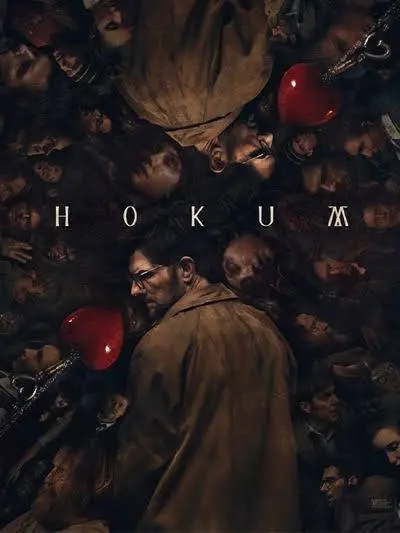
Hokum Review (2026): A Folk Horror Nightmare That Turns Grief Into Something Monstrous
Damian McCarthy follows his acclaimed horror films Caveat and Oddity with another chilling descent into supernatural dread. Anchored by a career-best performance from Adam Scott, Hokum transforms a haunted Irish hotel into the setting for one of 2026's most atmospheric and emotionally resonant horror experiences.
Following the critical success of Caveat and Oddity, Irish filmmaker Damian McCarthy has quickly become one of horror's most intriguing modern voices. His latest film, Hokum, continues his fascination with folklore, grief, guilt, and the terrifying things lurking in dark corners. This time, McCarthy trades cursed objects for a haunted Irish hotel, crafting a supernatural mystery that feels equally inspired by classic ghost stories and contemporary psychological horror.
Starring Adam Scott in a role unlike anything most audiences have seen from him before, Hokum is less concerned with overwhelming viewers through nonstop scares than it is with creating a lingering sense of unease. The film delivers plenty of jump scares, but its greatest strength lies in atmosphere. Every hallway, every shadow, and every strange sound feels designed to make the audience question what might be waiting just out of sight.
Story & Screenplay
The story follows Ohm Bauman (Adam Scott), a successful but deeply unpleasant horror novelist who travels to rural Ireland to scatter his parents' ashes. His destination is a remote hotel connected to their happiest memories, but what begins as a personal pilgrimage soon evolves into a supernatural mystery involving a missing hotel employee, local folklore, and rumors of a centuries-old witch imprisoned within a sealed honeymoon suite.
To the film's credit, McCarthy avoids excessive exposition. The screenplay trusts audiences to piece together clues through fragmented conversations, unsettling visions, and environmental storytelling. The mystery unfolds organically, revealing connections between Ohm's emotional baggage and the hotel's dark history.
At times, however, the script may frustrate viewers looking for straightforward answers. Several plot threads remain deliberately ambiguous, and not every mystery receives a neat resolution. Some horror fans will appreciate this approach, while others may find the narrative occasionally overcomplicated.
What elevates the screenplay above standard haunted-house fare is its emotional foundation. Beneath the supernatural chaos is a story about grief, regret, and the burden of unresolved trauma. The horror never feels disconnected from the protagonist's emotional journey, giving the film weight beyond its scares.
Performances
Adam Scott delivers one of the most compelling performances of his career. Known for balancing humor and vulnerability in projects like Severance and Parks and Recreation, Scott embraces a much darker role here. Ohm is intentionally difficult to like—arrogant, bitter, and emotionally closed off—but Scott manages to make him fascinating rather than unbearable.
What makes the performance work is Scott's ability to reveal small cracks beneath the character's abrasive exterior. In quieter moments, his grief becomes visible through subtle expressions rather than dialogue. Those moments give emotional context to the increasingly surreal events unfolding around him.
Florence Ordesh provides warmth and humanity as Fiona, while David Wilmot nearly steals the film with a wonderfully eccentric performance that injects moments of dark humor into an otherwise oppressive narrative. Their presence prevents the film from becoming emotionally exhausting and helps ground its more supernatural elements.
Direction & Atmosphere
This is where Hokum truly excels.
Damian McCarthy understands something many horror filmmakers forget: atmosphere is often more frightening than spectacle. Rather than overwhelming viewers with constant violence or excessive visual effects, he patiently builds tension through composition, silence, and anticipation.
The remote Irish hotel becomes a character in its own right. Every corridor feels wrong. Every room feels as though it is hiding something. Even seemingly harmless spaces carry an unsettling energy. McCarthy repeatedly transforms ordinary locations into sources of dread through careful staging and timing.
One of the film's greatest achievements is how it weaponizes audience expectation. Several sequences begin like familiar horror setups, only to unfold in completely unexpected ways. Even when viewers anticipate a scare, McCarthy often finds creative methods of delivering it.
There are admittedly more jump scares than in his previous films, and some may argue that the film occasionally relies on them too heavily. Yet unlike many modern horror movies, most of these scares emerge naturally from the atmosphere rather than feeling artificially inserted.
Cinematography & Sound Design
Horror often lives or dies through its technical execution, and Hokum benefits enormously from its craftsmanship.
Cinematographer Colm Hogan creates images that feel simultaneously beautiful and threatening. Darkness dominates much of the film, yet the visuals remain clear and purposeful. Shadows become active participants in the storytelling, constantly suggesting movement or hidden threats.
The use of practical locations adds tremendous authenticity. Unlike many studio-produced horror films that feel artificial, Hokum's setting feels lived-in and believable. The hotel's aging walls, dimly lit hallways, and decaying rooms create a tangible sense of place.
Meanwhile, the sound design is exceptional. Strange creaks, distant footsteps, rattling chains, and barely audible whispers create constant unease. Several of the film's most effective scares occur because of what audiences hear before they see anything. The soundscape transforms even quiet scenes into exercises in tension.
What Works
- Adam Scott delivers a layered and surprisingly moving performance.
- Damian McCarthy continues to prove himself as a master of atmosphere.
- The haunted hotel setting is richly detailed and genuinely creepy.
- Strong cinematography and sound design enhance every scare.
- The emotional themes of grief and guilt add depth to the horror.
- Several sequences rank among the most memorable horror moments of 2026.
What Doesn't Work
- Some viewers may find the story unnecessarily convoluted.
- Not every mystery receives a satisfying payoff.
- The middle section occasionally slows the film's momentum.
- Certain supporting characters deserved more development.
- The heavy reliance on jump scares may divide fans of slower psychological horror.
Final Verdict
Hokum isn't merely another haunted-house movie. It's a carefully crafted exploration of grief wrapped inside a deeply unsettling supernatural mystery. Damian McCarthy once again demonstrates remarkable confidence as a filmmaker, delivering scares that work because they're built upon atmosphere, character, and emotional investment.
While its narrative complexity and reliance on jump scares may not appeal to everyone, the film's strengths far outweigh its shortcomings. Between Adam Scott's excellent performance, the haunting Irish setting, and McCarthy's masterful control of tension, Hokum stands as one of the strongest horror releases of 2026.
FAQ
Is Hokum worth watching?
Yes. Horror fans who appreciate atmospheric storytelling, folk horror, and slow-building dread will find plenty to admire.
Is Hokum scary?
Yes. The film combines psychological tension, supernatural horror, and several highly effective jump scares throughout its runtime.
Does Hokum have a post-credit scene?
No. There is no significant post-credit scene, so viewers can leave once the credits begin.
Who stars in Hokum?
The film stars Adam Scott, Florence Ordesh, David Wilmot, Peter Coonan, and Michael Patric.
Who directed Hokum?
Hokum was written and directed by Damian McCarthy, the filmmaker behind the acclaimed horror films Caveat and Oddity.
Rating: 8.7/10
Verdict: A richly atmospheric folk-horror mystery elevated by Adam Scott's exceptional performance and Damian McCarthy's masterful command of suspense. Essential viewing for fans of intelligent supernatural horror that values dread as much as scares.
Comments (0)
Leave a Comment
No comments yet. Be the first to share your thoughts!
Related News
 Movie Ratings
 Movie Ratings
Never Miss a Story
Get the latest breaking news and exclusive content delivered straight to your inbox.