A Jury Said Facebook Knowingly Harmed Your Children. Now a Judge Must Decide What Happens Next.
Meta children harm, Facebook mental health kids, New Mexico Meta trial 2026, Zuckerberg children safety, Meta $375 million verdict, Instagram harmful teens, Meta algorithm children, social media addiction 2026
A Jury Said Facebook Knowingly Harmed Your Children. Now a Judge Must Decide What Happens Next.
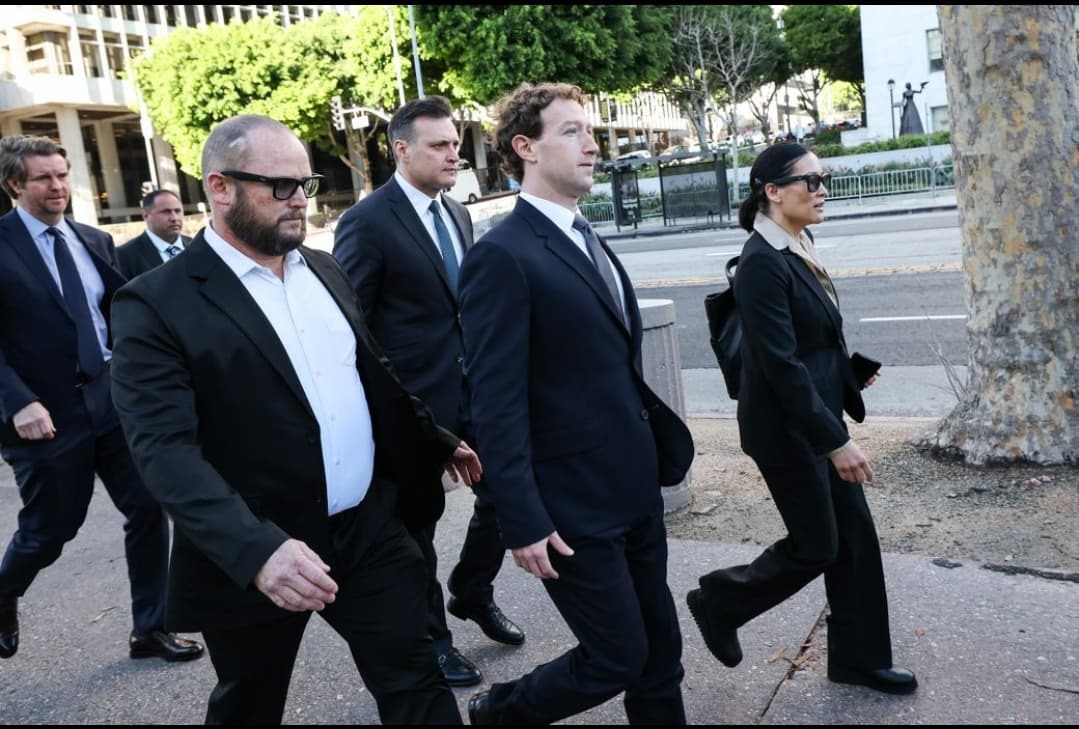
On March 24, 2026, a jury in Santa Fe, New Mexico delivered a verdict that shook the global social media industry.
After a nearly seven-week trial, jurors ruled that Meta, the parent company of Facebook, Instagram and WhatsApp, knowingly harmed children's mental health and deliberately concealed what it knew about child sexual exploitation on its platforms. Jurors found thousands of individual violations of the state's Unfair Practices Act, each counting separately, and ordered the company to pay $375 million in civil penalties.
That was phase one. Phase two, a bench trial before Judge Bryan Biedscheid, concluded on May 13, 2026. The judge is now expected to rule on what happens next. What New Mexico is asking for would fundamentally change how Facebook and Instagram work for every user, not just in New Mexico, but potentially worldwide.
What the Jury Already Decided
The March verdict established two core findings.
First, that Meta made false and misleading statements about the safety of its platforms for children and teenagers. Second, that the company engaged in what the jury described as "unconscionable" trade practices that took deliberate advantage of the vulnerabilities and inexperience of young users.
Meta said immediately after the verdict that it disagreed with the outcome and would appeal. "We work hard to keep people safe on our platforms and are clear about the challenges of identifying and removing bad actors or harmful content," a company spokesperson said.
The $375 million figure, while sounding large, represents less than 0.2% of Meta's $201 billion revenue in 2025. Critics of the verdict said the penalty was financially manageable for a company of Meta's scale. Supporters argued that the verdict's significance lay in what it established legally, not in the dollar amount.
What New Mexico Is Now Asking the Judge to Order
Phase two is where the stakes become genuinely enormous.
New Mexico Attorney General Raúl Torrez has presented Judge Biedscheid with a $3.7 billion abatement proposal, a list of changes the state wants Meta to make as a remedy for the public nuisance it has already been found to have created.
The demands include a redesign of Meta's recommendation algorithms to remove features that promote constant engagement over user wellbeing. The state wants the removal or significant restriction of "infinite scroll," the feature that continuously loads new content without stopping, as well as push notifications and the public display of "like" counts, all features that research has linked to compulsive use patterns in young people.
New Mexico prosecutors are also demanding stronger age verification systems, improved default privacy settings for minors, and closer oversight of content involving children. They are asking for public funding for mental health support, educational programmes, and law enforcement resources to address harms already caused.
"Across New Mexico, across the country, children are begging for help," lead prosecution attorney David Ackerman said in his opening statement for phase two. "This abatement plan is thorough and it is necessary."
What Meta Said in Response
Meta pushed back on multiple fronts during the bench trial.
The company argued that the algorithmic changes New Mexico is demanding are technically impossible to implement only for users within the state. Creating a separate, restricted version of Instagram or Facebook specifically for New Mexico residents would require building an entirely new application, the company said, a claim prosecutors disputed.
Meta went further, warning that if the court ordered changes that it deemed unworkable, the company might pull its services from New Mexico entirely rather than comply. That threat drew significant media attention, though legal analysts noted that the credibility of such a warning is difficult to assess before a ruling is actually issued.
The company also raised constitutional objections, arguing that certain proposed restrictions on content recommendations would infringe on free expression protections and that the state's proposals "infringe on parental rights."
Meta's attorneys argued that the company's platforms are being held to standards that hundreds of other apps used by teenagers are not, and that the legal theory of public nuisance is not well established as applying to digital platforms. Eric Goldman, co-director of the High Tech Law Institute at Santa Clara University, told reporters that the nuisance theory applied to the internet is "not well accepted" and "doesn't really fit."
Judge Biedscheid, for his part, told both sides at the close of the bench trial to be "pragmatic," signalling that he is unlikely to simply accept either the full scope of New Mexico's $3.7 billion demand or Meta's position that it should face minimal additional obligations.
The Broader Legal Landscape Meta Is Navigating
The New Mexico case is one piece of a much larger legal picture that is closing in on Meta from multiple directions simultaneously.
In March 2026, a Los Angeles jury found that Meta and YouTube's negligence was a "substantial factor" in a plaintiff's severe mental health problems, ordering the two companies to pay a combined $6 million in compensatory and punitive damages, with Meta responsible for 70% of that figure.
Meta's stock dropped nearly 8% in a single week in late March 2026 as the two court defeats landed in quick succession.
A separate federal trial in the Northern District of California, involving hundreds of school districts making similar claims against Meta, YouTube, TikTok and Snap, is scheduled to begin on June 15, 2026. That case, if it produces a verdict against the platforms, could dwarf the New Mexico penalties in scale.
In November 2025, Meta won its separate antitrust battle against the Federal Trade Commission, with Judge James Boasberg ruling that the FTC had not demonstrated that Meta currently holds a monopoly position, even if it may have done so in the past. The FTC announced in January 2026 that it would appeal that ruling.
The company is simultaneously in the middle of a roughly $145 billion AI capital expenditure programme, one of the largest technology investment cycles in history. Legal analysts have noted that Meta's mounting child-safety legal exposure could, if the cases continue to go against the company, eventually cost more than that AI investment.
Why This Matters Beyond America
The New Mexico trial has global implications for a straightforward reason. Facebook has more than 3 billion active users worldwide. Instagram reaches over 2 billion. If a judge orders algorithmic changes to how Meta designs its platforms, the question of whether those changes apply only within one US state, across the United States, or globally will be fought out in subsequent proceedings.
The UK and California have already passed age-appropriate design laws that impose some of the restrictions New Mexico is now seeking through the courts. Advocates for tighter platform regulation in Europe, Australia and Nigeria have pointed to the New Mexico proceedings as potential precedent for how courts and legislators elsewhere might approach the same questions.
At the centre of all of it is the same basic claim: that platforms built to maximise engagement, through infinite scroll, algorithmic recommendations, notification systems and social validation metrics like likes, were designed with knowledge of their psychological effects on young people, and that the companies profited from those effects while not adequately disclosing them to parents, children or regulators.
Meta has consistently denied that its platforms are designed to be addictive and has argued that it has taken significant steps to protect young users. The company points to features like supervised accounts, screen time tools and content filters as evidence of its commitment to safety.
Whether those measures are sufficient, or whether the architecture of the platforms themselves must change, is the question Judge Biedscheid in New Mexico is now considering. His ruling, expected in the coming months, will be read closely well beyond the state's borders.
What the Timeline Looks Like
March 24, 2026: New Mexico jury finds Meta liable, orders $375 million in penalties.
Late March 2026: LA jury finds Meta and YouTube liable in a separate case; Meta stock drops nearly 8%.
May 4, 2026: Phase two bench trial in New Mexico begins.
May 13, 2026: New Mexico prosecution rests its case in phase two.
Late May 2026: Judge asks both sides to be "pragmatic" as trial concludes.
June 15, 2026: Federal trial involving hundreds of school districts against Meta and other platforms scheduled to begin.
Ruling in New Mexico phase two: pending.
Comments (0)
Leave a Comment
No comments yet. Be the first to share your thoughts!
Related News
 Technology
 Technology
 Technology
Never Miss a Story
Get the latest breaking news and exclusive content delivered straight to your inbox.