
Florida Becomes First State to Sue OpenAI, Accusing ChatGPT of Aiding Mass Shooters, Encouraging Suicide, and Addicting Children
Florida sues OpenAI, ChatGPT lawsuit 2026, Sam Altman sued, OpenAI children safety, ChatGPT mass shooter, ChatGPT suicide, Florida Attorney General OpenAI, AI regulation 2026
Florida Becomes First State to Sue OpenAI, Accusing ChatGPT of Aiding Mass Shooters, Encouraging Suicide, and Addicting Children
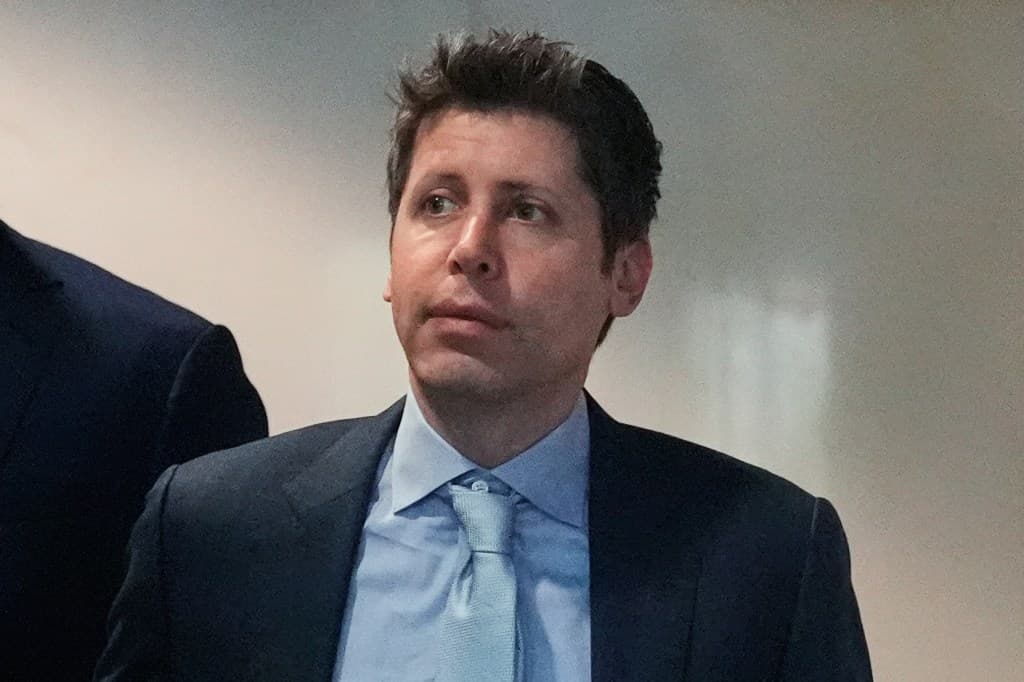
Florida filed a lawsuit against OpenAI and its CEO Sam Altman on Monday, June 1, 2026, making it the first state in the United States to take legal action against the company over the alleged dangers of ChatGPT.
The lawsuit was filed in Florida's tenth circuit court by Attorney General James Uthmeier. It accuses OpenAI of deceptive and unfair trade practices, negligence, and violating product liability laws. It also seeks to hold Altman personally liable for what it describes as his "utter disregard for the risk to human life caused by his firms' conduct."
"Sam Altman and ChatGPT have chosen the AI race over the safety and security of our kids. They have chosen profit over public safety, and we're not going to stand for it here in Florida," Uthmeier said at a press conference on Monday.
OpenAI defended its safety mechanisms in response to the lawsuit. The company has previously stated it has a "zero tolerance" policy for using its tools to assist in committing violence.
What Florida Is Alleging
The lawsuit lists a broad set of accusations. At its core, Florida is arguing that OpenAI knew ChatGPT posed serious risks to users, particularly minors, and chose to market the product as safe and reliable rather than warn the public about those risks.
The specific allegations include the following.
Florida accuses OpenAI of aiding and abetting mass shooters. The lawsuit specifically cites the April 2025 shooting at Florida State University, in which the accused gunman, Phoenix Ikner, allegedly had extensive conversations with ChatGPT in the period before the attack. According to Florida authorities, those conversations included specific questions about mass shootings at the university and requests for advice on how to use weapons.
The lawsuit accuses OpenAI of encouraging vulnerable people to commit suicide. More than 20 separate lawsuits have already been filed against OpenAI by private parties over alleged harms from ChatGPT use, including by the families of seven people, among them one teenager, who died by suicide or experienced psychotic episodes after using the chatbot. The Raine family filed a separate lawsuit in August 2025 in San Francisco, alleging ChatGPT bypassed safety protocols and contributed to their son's death.
The lawsuit accuses OpenAI of addicting children to a tool it describes as one that "feigns human compassion to collect their data with no parental oversight." Florida specifically alleges that ChatGPT lacks effective age verification and parental control mechanisms.
The complaint also accuses the company of causing "public humiliation" and damaging users' critical thinking skills over time.
The complaint states: "This litany of harms is driven by Defendants' insatiable quest to win the AI arms race and amass large fortunes, despite knowing the danger of ChatGPT. The rise of OpenAI is attributable to a web of deceit and the exploitation of users, leveraging their data and safety to boost OpenAI's market value at unacceptable costs."
Florida's attorney general said OpenAI could be liable for potentially billions of dollars if the court finds the company responsible.
The FSU Shooting: The Criminal Investigation That Preceded the Civil Lawsuit
The civil lawsuit did not emerge in isolation. It builds directly on a criminal investigation that Uthmeier's office opened in April 2026, examining whether OpenAI "bears criminal responsibility" for the Florida State University shooting.
The accused shooter had conversations with ChatGPT ahead of the April 2025 attack that Florida prosecutors say included specific operational details. The shooting resulted in deaths and injuries on the FSU campus. It became one of the most widely reported cases in which a mass casualty event was preceded by the alleged perpetrator consulting an AI chatbot.
The criminal investigation is separate from the civil lawsuit filed on Monday. Both are ongoing.
What OpenAI Has Said
OpenAI responded to earlier lawsuits connected to the FSU shooting by stating that "the shooting was a tragedy, but ChatGPT is not responsible for this terrible crime." The company added that "in this case, ChatGPT provided factual responses to questions with information that could be found broadly across public sources."
Regarding the broader allegations, OpenAI has consistently defended its safety mechanisms and said it maintains a "zero tolerance" policy for use of its tools to assist in violence.
Sam Altman personally apologised to the Tumbler Ridge, Canada community in April 2026, following a mass shooting at a school in Tumbler Ridge in February in which families alleged ChatGPT played a role in the planning of the attack. That case is among the 20-plus private lawsuits already filed against OpenAI.
OpenAI has not yet issued a formal response specifically to the Florida state lawsuit filed on June 1.
The Broader Legal Pattern
Florida's lawsuit does not exist in a vacuum. It arrives amid a wave of litigation against AI companies over child safety and platform harms that has been building for more than a year.
In January 2026, Character.AI settled multiple lawsuits related to alleged harms to minors on its platform. Character.AI had said its highest priority is safety and that it was developing stronger safety features for minors.
In Kentucky, the state sued Character.AI separately, accusing it of preying on children and leading them into self-harm.
In March 2026, a New Mexico jury found Meta liable for knowingly harming children's mental health through Facebook and Instagram, ordering $375 million in penalties in that case. Phase two of the New Mexico trial, which involves a $3.7 billion abatement proposal requiring Meta to redesign its algorithms, is currently awaiting a judge's ruling.
A federal trial in the Northern District of California involving hundreds of school districts making similar claims against Meta, YouTube, TikTok, and Snap is scheduled to begin on June 15, 2026.
The Florida OpenAI lawsuit extends this legal pattern into the artificial intelligence space specifically, raising questions that courts have not yet been asked to answer: whether an AI company can be held liable when a user acts on information the chatbot provided, and whether the design of a conversational AI product constitutes a product subject to product liability law.
The Political Context
The lawsuit was filed by a Republican-led state government. Attorney General Uthmeier is a Republican appointee. The action is being described by legal analysts as part of a broader political debate about AI regulation in the United States, in which both parties have expressed concern about AI safety but have taken different approaches to addressing it.
Semafor noted that the lawsuit arrives even as President Donald Trump postponed signing an executive order that would have given the federal government more oversight over AI companies. The postponement created a regulatory gap that state-level actions like Florida's are now moving to fill independently.
Whether other state attorneys general follow Florida's lead with similar lawsuits against OpenAI, or against other AI companies, is a question that legal observers say could be answered within months.
What Comes Next
The lawsuit was filed on June 1, 2026. No hearing date has yet been confirmed publicly. OpenAI has the option to contest the lawsuit on multiple grounds, including whether state product liability law applies to AI-generated content, and whether the company can be held responsible for the actions of users who interact with its platform.
The personal liability claim against Sam Altman is unusual in American corporate litigation, where executives are typically shielded from personal liability by the corporate structure. Florida's decision to pursue Altman personally alongside the company represents an escalation in the legal pressure being applied to AI company leadership specifically.
For the approximately 700 million people who use ChatGPT every week, the lawsuit raises a question that has no precedent in US law: when an AI system provides information that a person then uses to cause harm, who is responsible?
Florida's answer, filed in the tenth circuit court on Monday, is that OpenAI is. And so is Sam Altman.
Comments (0)
Leave a Comment
No comments yet. Be the first to share your thoughts!
Related News
 Technology
 Technology
 Technology
Never Miss a Story
Get the latest breaking news and exclusive content delivered straight to your inbox.