Bandits Hosted a N100 Million TikTok Giveaway With Ransom Money. Nigerians Dropped Their Account Numbers. The Senate Is Now Furious.
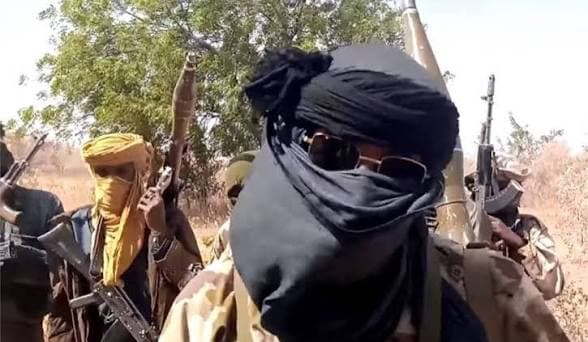
Bandits conducted a live TikTok giveaway of over N100 million in suspected ransom money on June 8, 2026. Nigerians watching the stream dropped their OPay and MoniePoint account numbers in the comments. Three days later, the Senate ordered a full crackdown. Senator Natasha Akpoti-Uduaghan said it on the floor of the chamber: "Two days ago on TikTok, bandits conducted a giveaway, distributing over N100 million within 30 minutes." Nobody has been arrested yet.
Bandits Hosted a N100 Million TikTok Giveaway With Ransom Money. Nigerians Dropped Their Account Numbers. The Senate Is Now Furious.
On the evening of June 8, 2026, a TikTok live stream began broadcasting in Nigeria. The host was not a celebrity. Not a musician. Not a comedian. The host was a bandit.
For approximately 30 minutes, a criminal group distributed over N100 million in cash to viewers who dropped their bank account numbers in the comments. Account numbers tied to OPay and MoniePoint wallets flooded the screen. Nigerians, many of them desperately poor, shared their details freely in the hope of receiving a transfer.
The live stream ended. The money moved. Nobody was arrested.
Three days later, Senator Natasha Akpoti-Uduaghan stood on the floor of the Nigerian Senate and described exactly what had happened.
"Bandits and terrorists who carry out these activities live on their social media handles. Two days ago on TikTok, bandits conducted a giveaway, distributing over N100 million within 30 minutes through their social media handles," she told her colleagues.
Her next question was the one that has no comfortable answer.
"I wonder why the Cybercrime Unit and the Police Force generally cannot track these activities and apprehend them since they are on social media."
What Happened on June 8
The TikTok giveaway on June 8 was not the first of its kind, but it was the most documented and the most widely discussed.
West Africa Weekly, which first reported the incident in detail, described the scene as one of complete normalisation of criminality. Rather than reporting the live stream to security agencies, viewers treated it as an opportunity. Account numbers flew across the comment section. Money moved in real time from suspected ransom proceeds directly into the hands of ordinary Nigerians.
An eyewitness account shared on X by a user identified as Plateau Militia Asian girl read: "I'm not the only one who witnessed that massive giveaway bandits hosted on TikTok. The desperation from Nigerians especially the girls, was honestly shocking. Account numbers, mostly OPay and MoniePoint, were flying across the screen non-stop during his live stream between 12:00."
West Africa Weekly noted that the complete normalisation of banditry visible in viewers' responses was alarming in itself. Participants did not recoil from identifying the source of the money. They wanted it. The act of voluntarily sharing bank account details with people publicly displaying proceeds of kidnapping also raised concerns about identity theft, financial fraud, and extortion, given that the criminals now held the financial details of thousands of ordinary Nigerians who had participated.
No official statement was issued by the National Orientation Agency or the Nigeria Police Force in response to the TikTok live stream before the Senate took it up on June 11.
What the Senate Did About It
The Senate's response came through a motion of urgent national importance sponsored by Senator Sunday Karimi, representing Kogi West Senatorial District, on June 11, 2026.
Karimi's motion was primarily about the escalating wave of terrorist attacks in Kogi State. He informed the Senate that on June 10, terrorists had invaded Government Secondary School in Iluke, Kabba/Bunu Local Government Area, during WAEC examinations, killing the Vice Principal, a teacher, and an indigene of the community. This attack came just two days after a separate assault in Odo-Ere, Yagba West, on June 8.
During deliberations on Karimi's motion, Akpoti-Uduaghan raised the TikTok issue as an additional prayer, calling for cybercrime enforcement to match the digital boldness of criminal networks.
Senate President Godswill Akpabio supported the position, urging security agencies to treat the situation as part of a broader national security emergency requiring sustained intelligence coordination. He told the chamber that if criminals were apprehended, security agencies should also report back to Nigerians publicly "so that Nigerians can know that those who openly show their faces while committing crimes are being arrested and prosecuted."
The Senate adopted the motion and passed a resolution directing the Nigeria Police Force National Cybercrime Centre and other relevant security agencies to monitor, track and arrest criminals using social media platforms to publicise criminal operations.
The Senate also called on the Federal Government and the Central Bank of Nigeria to strengthen cashless policy enforcement to disrupt ransom-based kidnapping financing, and separately ordered a full halt to all state-level dialogue, amnesty, and financial peace accords with bandits.
The Kogi Attacks That Triggered the Motion
The Senate's response to the TikTok giveaway was embedded in a broader conversation about Kogi State, where the security situation has deteriorated sharply in recent weeks.
On June 8, armed attackers assaulted a private residence in Odo-Ere, Yagba West Local Government Area.
On June 10, the same day VDM arrived in Abuja and referenced in his protest speech, terrorists stormed Government Secondary School in Iluke, Kabba/Bunu Local Government Area, during active WAEC examination sessions. The Vice Principal of the school was killed. A teacher was killed. An indigene of the community was killed. Students who had gathered to sit their national examinations fled in panic as gunshots rang through the building.
Senator Karimi, who had raised the alarm about Kogi before, described the attack on the school as an act of brazen terrorism that showed no respect for life, education, or the children of the state.
The Kogi attacks added to a national pattern. Oyo State. Borno State. Kaduna State. Now Kogi. The geography of abduction and armed attack is no longer confined to the North-West and North-East. It is spreading.
The State Police Bill Passes the Same Week
In a development directly connected to the debate about insecurity, the House of Representatives passed the State Police Bill on June 12, 2026 with 289 votes in favour and just one vote against.
The passage, described by The Nigerian Observer as signalling a major security shift, would allow state governments to establish and operate their own police forces, a measure that supporters argue would provide faster, more locally responsive law enforcement in communities currently underserved by the centralised federal police structure.
Critics of state police have historically argued that giving governors their own armed forces creates a risk of political abuse, with governors potentially using state police against political opponents. Both sides of that argument are well established in Nigeria's political debate.
The Bill still requires Senate concurrence and presidential assent before it becomes law. But its passage with 289 votes in the House is the strongest legislative momentum the proposal has ever carried.
Why the TikTok Giveaway Story Matters Beyond the Senate
The image of a bandit hosting a live TikTok giveaway with ransom money, while thousands of Nigerians queue up in the comments to receive it, is one of the most disturbing single snapshots of where the country finds itself in June 2026.
It is not just that criminals feel untouchable enough to broadcast their proceeds publicly on a platform that requires a phone and an internet connection to access. It is that a meaningful portion of the viewing audience did not see a criminal to be reported. They saw a source of income.
That is the product of an economy in which 63% of the population lives in poverty, in which N100 million is more money than most families will see in a generation, and in which the state's visible failures to punish insecurity have eroded the assumption that reporting criminality leads to any outcome at all.
The Senate's resolution is the institutional response. The cybercrime centre has been directed to act. The cashless policy has been urged to tighten.
But the TikTok account that hosted the giveaway has not been taken down. The bandits who distributed the money have not been named or charged. The Nigerians who received the transfers are not facing investigation.
The Senate passed a resolution. The live stream already ended. The money is already spent.
Key Facts
June 8, 2026: Bandits host TikTok live stream, distribute over N100 million in suspected ransom money within 30 minutes. Viewers share OPay and MoniePoint account numbers in comments.
June 8, 2026: Bandits attack Odo-Ere, Yagba West, Kogi State.
June 10, 2026: Bandits attack Government Secondary School, Iluke, Kogi State during WAEC exams. Vice Principal, teacher, and one community member killed.
June 11, 2026: Senator Natasha Akpoti-Uduaghan raises TikTok giveaway on Senate floor. Senate adopts motion directing NPF-NCCC and security agencies to track and arrest bandits operating on social media.
June 12, 2026: House of Representatives passes State Police Bill 289 votes to 1.
June 13, 2026: No arrests confirmed in connection with the TikTok giveaway.
Comments (0)
Leave a Comment
No comments yet. Be the first to share your thoughts!
Related News
 Politics
Never Miss a Story
Get the latest breaking news and exclusive content delivered straight to your inbox.